Web design and development in Mississauga
We build websites for Mississauga businesses that bring in qualified enquiries, carry a full product range, and connect to the systems your team already works in — design, development, integrations and search, handled by one team.





Websites we have designed & built
Manufacturers, distributors, professional firms and retailers — most with a catalogue, a quote process or another system behind them.
Scroll to explore →Want to see one like yours?
Quote requests answered within one business day.
With 19 years across web design, development and marketing, we have learned that what a Mississauga business needs from a website depends almost entirely on how it sells. A professional firm needs to be found and trusted before the first call. A distributor needs a buyer to reach the right product and get a quote to the right person. A manufacturer running several brands needs them under one roof without competing with each other.
Plenty of that work is B2B and technically involved — product catalogues people filter by specification, pricing that changes by customer, and the site talking to your ERP, CRM or inventory system through an API so nobody is retyping orders. Some of it is a clean, fast site that makes a good firm look like one. We ask which you are before we design anything, and we build in both official languages where your market asks for it.
Award Winning web design company in Mississauga.
Six services, one team. Most Mississauga projects need three or four of them, and they work better decided together than bought separately.

Custom website design
A website is a sales conversation you are not in the room for. We start with what a buyer needs to see before they will pick up the phone, then design the site around that — where the product range sits, what has to be proved, what the enquiry form asks for, and what gets cut. You review the design and click through a working prototype before development starts.
Web development and custom applications
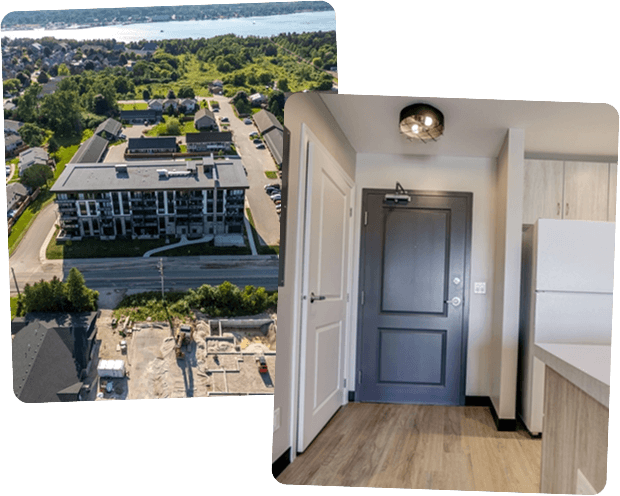
Some projects are a website. Others are software with a website attached. We build custom WordPress themes for most sites, headless or an enterprise CMS where scale demands it, and full applications where a plugin will not do — the tenant portal behind NP Housing handles applications, status tracking and property issues.

ERP, CRM and API integrations
A website that talks to nothing else becomes a second set of data somebody keeps up to date by hand. Every manual re-entry is a place the data goes wrong. We connect sites through APIs to the systems already running the business, so pricing, stock, orders and enquiries move on their own. We integrate with:
Ecommerce, catalogues and quoting
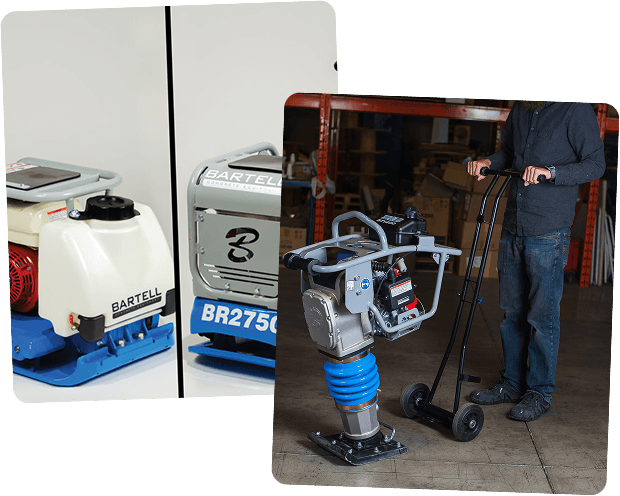
A quote request abandoned halfway is a competitor’s order. We build stores on Shopify and WooCommerce, including wholesale/B2B. Plenty of Mississauga manufacturers never take a payment online — they take a request for quote — so we build catalogues that filter by specification and quote engines that pass the full configuration to your sales team to price it, as we did across six brands for Bartell Global.

SEO and AI search visibility
Our SEO/AEO team sits in-house, so the structure that ranks is decided while the site is being designed rather than bolted on afterwards — and that same structure is what lets ChatGPT, Gemini and Google AI Overviews quote you when a buyer asks them instead of searching.
Buyers now ask an assistant before they ask a supplier.
More on SEO and AI search ↗
Accessibility and multilingual
Ontario’s minimum under AODA is WCAG 2.0 Level AA; we build to 2.1 Level AA and design for it from the start rather than patching it in later. Both are cheap to plan from the beginning but are expensive to retrofit.
Where you sell into Quebec or bid on government work, we build the site in both official languages using WPML, Weglot, or native Shopify apps; with a manual override where needed.
How a website project runs at Arete
Four stages, and the detail that decides the project is captured in the first one.
Discover and scope
The kick-off meeting goes into the business, the process, the business rules and the internal logic your sales team works to — how pricing changes by customer, what triggers a quote, who it routes to. This is the base for everything after it, and it is why the number we quote holds.
Design
Structure first — what goes on which page and in what order — then the design, then a prototype you can click through on your own phone. Revisions happen here, while a change costs an afternoon rather than a rebuild.
Build and integrate
Development, content and integrations come together on a staging site you can visit any time, tested as we go across browsers, screen sizes, forms and assistive technology. We use AI through this stage to check content and spec sheets for inconsistencies and prepare product data for import.
Launch, train and hand over
Go-live, then training on the parts your team will actually use, and everything handed across — code, hosting access, admin accounts, documentation. Maintenance picks it up from there if you would rather not run it yourself.
Content and business rules are what move launch dates. You get the list of both in week one — start early or hand the content to our writers.
Mississauga web design case studies
Two Mississauga businesses with very different problems — one selling equipment through six brands, one selling trust before a phone call.
Why the integration work decides who you hire
Most website projects in this market go wrong in the same place: the point where the site has to talk to some external system.
A design studio wins the project and subcontracts the development. The developer discovers in week six that the pricing logic is more complicated than the brief said, or that the ERP’s API does not expose what everyone assumed it would. Nobody is at fault exactly — the team who scoped it was not the team who has to build it, and the business rules were never written down in the kick-off meeting.
We ask about those rules in the kick-off meeting, before anything is designed, because our developers are in the building and get asked. That is also why the price we quote is the price you pay: the surprises that blow up fixed quotes are almost always the ones nobody went looking for.
Everything in-house — design, development, ecommerce and SEO — and you own all of it at handover: code, hosting access, admin accounts, documentation. You can leave and take the lot.


Recognised work, proven platforms
Thirty industry awards since 2007 are a testament to the work our team puts in to get clients where they need to be. We build on platforms we have tested across hundreds of projects — so what we take on for you is work we have delivered many times over for businesses like yours.
Awards & Ratings




Technology Partners





Web design in Mississauga — questions answered
Nineteen years in, the first call tends to cover the same ground. Here is what we would tell you on it.
Three things worth checking on any shortlist, ours included.
- Ask who writes the code — if development is subcontracted, the person scoping your project is not the person who has to build it, and that gap is where fixed prices stop being fixed.
- Ask what they do about the systems you already run, because connecting a site to an ERP or CRM is where most projects find their surprises.
- Ask what happens when scope changes, before it does.
Our answers: everything in-house, integrations discussed at kick-off rather than discovered in week six, and any change flagged before it is built rather than invoiced after.
It comes down to how much is built from scratch and how many of your other systems the site has to talk to. Three bands cover nearly everything we quote.
- Business websites: $5,000 – $15,000. A custom-designed site for an established business.
- Custom and B2B websites: $10,000 – $50,000. Product catalogues, quote engines, customer-specific pricing, and integrations with your ERP or CRM.
- Ecommerce websites: $10,000 – $100,000. Scaling with catalogue size, wholesale requirements and how much data has to be migrated.
You get a fixed price for a fixed scope after a scoping call. There is a fuller breakdown of what a website costs in Canada on our blog.
For a small firm that needs five pages and a contact form, a template or a website builder will do the job, and we will say so rather than quote for something larger.
It stops being enough at a predictable point: when you need a catalogue people can filter, when pricing changes by customer, when the site has to connect to your accounting system, or when you are competing for search terms other companies are actively working on. After that, the cheap site costs you enquiries — which is the expensive kind of saving.
Yes, through their APIs. We regularly connect sites to QuickBooks, Sage, Microsoft Dynamics 365 Business Central, NetSuite, SAP Business One and Epicor, and to Salesforce, HubSpot and Zoho.
In practice it means product and pricing data flowing one way, orders and enquiries flowing the other, and nobody retyping anything between two systems. If yours is less common, the question is simply whether it has an API or an export we can work with — we check that before quoting rather than after.
Two things, and the second catches people out. Content is the obvious half — copy, product information, photography, logos, and access to anything the site connects to.
Your business rules are the half that matters more: how pricing works for different customers, volume discounts, minimum order quantities, who is allowed to see trade pricing, how a quote request gets routed and to whom. Those rules are what we are actually building, so the earlier they are written down the less rework there is. You get a specific list in week one, and our writers can take the content on if your team is stretched.
Yes, and they are the same in-house team rather than an agency that designs and a contractor who builds.
That covers custom WordPress themes, headless and enterprise CMS builds, ERP and API integrations, platform migrations, and custom applications such as portals and dashboards. If your project is more application than website — a customer portal, a dashboard, a booking system — that is squarely what we do.
Yes, and this is where redesigns most often go wrong. Every existing URL is mapped to its new address before launch, and the pages already earning traffic are kept rather than rewritten on instinct.
Most clients gain traffic after launch rather than losing it. WEICS grew organic traffic 127% after their redesign, and Markwell Law grew 187%.
On a standard business site the answer is usually search — search that understands what someone means rather than matching their exact words. It matters most when your catalogue is technical and buyers rarely know the model name, which is why we built it for Genrep. The other thing worth having is a chatbot trained on your own business information — your products, your terms, your process — answering at two in the morning and handing off to your sales team the moment a question goes past what it should be answering on its own.
Ecommerce has more room. Beyond search, filters that adapt to how people actually shop rather than the categories you happened to build, product descriptions generated from your spec data and edited by a person, product images and short video pulled out of static studio shots, and shoppable video where someone buys without leaving the clip. We would not build all of that at once. We would pick the one or two that fit how your customers buy and get them working before adding more.
Internally we use AI for research before design, checking content and spec sheets for inconsistencies, and preparing product data ahead of an import — work that used to take days. Every decision that reaches your customers is still made by a person.
Yes, on Shopify, Shopify Plus and WooCommerce, and roughly half that work is B2B rather than consumer retail.
B2B stores need things retail does not: customer-specific pricing, trade-only accounts, minimum order quantities, quote-based ordering, purchase orders and tax exemption handling. We build those alongside a normal retail checkout when a business sells both ways.
WordPress is what we use for most informational business websites, usually with a custom theme rather than a commercial one. For stores where selling online is the main event, Shopify is usually simpler to run. Custom applications are built in Laravel.
Either way we build the admin around the content you will actually change — pages, products, team members, posts — so updating them does not need a developer. Training is included and we leave documentation behind for whoever joins later.
Yes, where your business needs it to. AODA applies to organisations in Ontario with 50 or more employees and to all public-sector organisations, and the standard it points to is WCAG 2.0 Level AA. We build to 2.1 Level AA, which covers that comfortably.
Worth doing either way, frankly. Accessibility built in from the start costs a fraction of retrofitting it — the same fixes cost several times more once the design is signed off and the code is written — and it widens who can actually use your site. We have delivered it on builds including Genrep and Bartell Global.
We are also an official AccessiBe partner, so where an existing site needs a faster route to compliance than a rebuild allows, that is an option we can quote alongside doing the work properly in the code.
- Business website: 4–6 weeks
- Custom B2B site with a catalogue and quote engine: 8–16 weeks
- Ecommerce build or migration: 8–16 weeks
The date is set at kickoff. What moves it is content and business rules arriving late, which is why you get the list for both in week one.
After launch you get training and a 90-day warranty on what we built. Most clients keep us on for updates, security and improvements — an unmaintained site is the one that eventually gets compromised — and some take the keys and run it themselves. You own everything either way: code, hosting access, admin accounts and documentation.
No — we are headquartered at 1 Yonge Street in Toronto with a second office in Ottawa, and our team works remotely across Ontario. Bartell Global and WEICS are both Mississauga clients built and supported this way, and we will come to you if a meeting in person helps.
Tell us what the site has to do.
Tell us what you are trying to build and what is getting in the way. We will come back within one business day with a straight answer on what we would do first — and a fixed quote once the scope is clear.
Everything in-house · You own it all at handover · Reply within one business day
Prefer to talk? Call 647-812-5125 or email hello@aretesoftware.ca — both reach the same senior team.