WooCommerce development agency in Toronto
We build, rebuild and migrate WooCommerce stores for businesses across the GTA and Canada — custom checkouts, wholesale pricing, ERP connections, and moves from Magento, Shopify or Wix that keep your SEO intact. Design, development and SEO are handled by one in-house team.




WooCommerce stores we have built in Toronto and beyond
A Toronto retailer with 6,000 products, a manufacturer selling through six brands, a food business taking delivery bookings. Different problems — and every one of these stores is now run by the client’s own team, day to day.
Scroll to explore →Want to see one like yours?
Quote requests answered within one business day.
WooCommerce is the right platform when your store has to bend to how you sell — pricing that changes by customer, a checkout that needs to ask for something unusual, content and products on the same site, or an ERP behind it that the store has to talk to. You own the code and the data, and no platform takes a monthly cut as you grow.
It is not always the right call. If you sell a simple range to consumers and want the least to manage, Shopify is usually simpler — we build on both, and for ecommerce web design in Toronto more broadly, we will tell you which fits before you commit to either.
WooCommerce development services in Toronto
If you are here, something about your store is costing you — a checkout that loses people, orders retyped by hand, a platform you have outgrown. These are the seven things we fix most often. Most stores need three or four, and they cost less decided together than patched in one at a time.

Custom WooCommerce development
A marketplace theme and a stack of plugins gets a store live fast, then slows it down and breaks at every update. We build custom WooCommerce themes, write a plugin where an existing one would need three workarounds, and rebuild the checkout around what your customers actually need to tell you.
WooCommerce B2B and wholesale
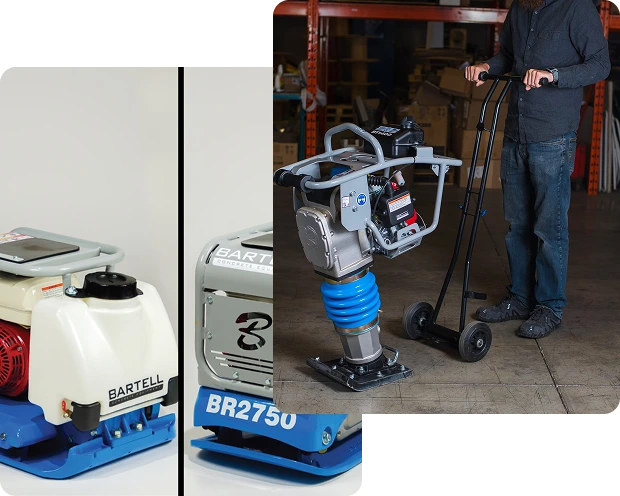
A trade buyer and a retail shopper should not see the same price, the same minimum or the same checkout. We build B2B and wholesale on WooCommerce — catalogues filtered by specification, quote engines that pass the full configuration to your sales team, and trade pricing by customer. Bartell Global runs six brands through one catalogue and quote engine; Genrep takes RFQs across a technical range in two languages.
WooCommerce ERP, accounting and CRM integrations
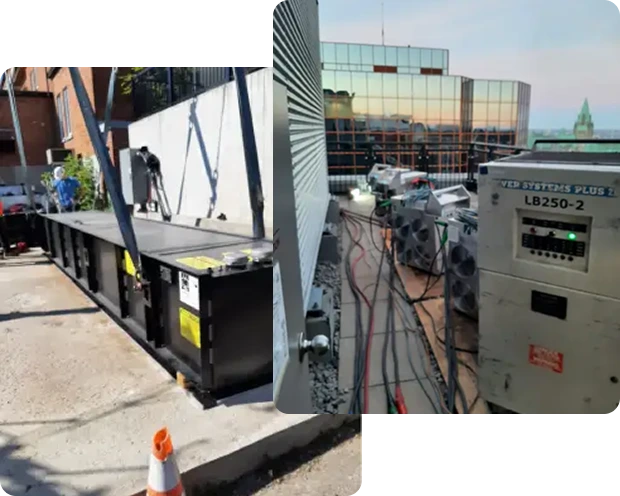
A store that talks to nothing else means someone retyping orders into the accounting system every morning — and every retyped order is a chance for a wrong price, a wrong quantity or a missed shipment. We connect WooCommerce through APIs to the systems already running your business, so stock, pricing, orders and customers move on their own. It is the same custom web development work we do beyond ecommerce.

WooCommerce migration in Toronto, without losing SEO
A migration that loses order history or search rankings costs you twice — once in the move, again in the months of traffic it takes to recover. We move stores to WooCommerce from Magento, Shopify, Wix, Ecwid and OpenCart, and protect your SEO by mapping every old URL to its new address before launch. For one Toronto retailer that meant 6,000 SKUs and 11,000 orders moved with nothing lost and zero downtime.
WooCommerce bookings, subscriptions and service stores
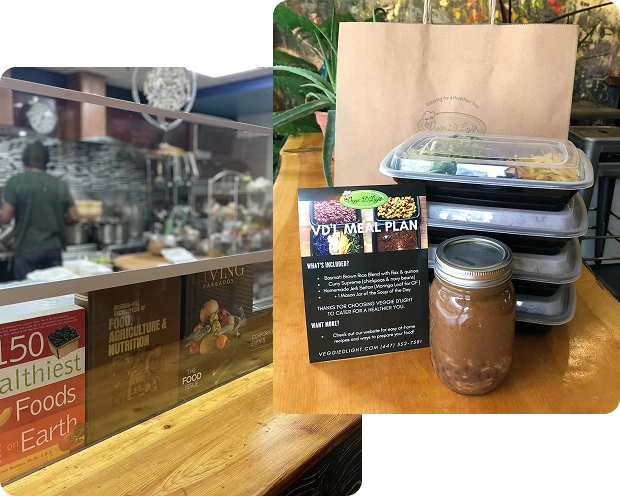
Not everything sold online is a box that ships. We build WooCommerce stores that take bookings and time slots, sell services from a catalogue, and handle repeat orders — like the Toronto food business whose customers pick a delivery or pickup window at checkout, and the marina that rents boathouses online.
WooCommerce SEO, AI search and speed
A store nobody finds is a cost, not a channel. Our SEO team is in-house, so product and category structure is planned for search while the store is being built — including the structure ChatGPT, Gemini and Google AI Overviews read when they recommend products. And because a slow store loses rankings and sales, we tune speed for large catalogues as part of the build. Genrep loads 68% faster and grew organic traffic 32% after the rebuild.
Accessible and bilingual WooCommerce stores
Ontario’s minimum under AODA is WCAG 2.0 Level AA; we build to 2.1 Level AA and design for it from the start, when it costs a fraction of fixing later. If you sell into Quebec or bid on government work, we run English and French on one store with WPML or Weglot — machine translation reviewed by a person, as we did when Genrep’s two language sites became one.
How a WooCommerce project runs
Most store projects that go over budget were mis-scoped, not mis-built. So, the first stage is where we look for the surprises — before they are priced in or built in.
Scope
We go through your products, how pricing works for different customers, what the store connects to and — for a migration — what is coming across and from where. That is what the quote is built on.
Design
Store structure first, then the design, then a prototype of the product, cart and checkout pages you can click through on your own phone. Changes happen here, while they cost an afternoon.
Build, migrate and integrate
Development, data migration and integrations on a staging store you can visit any time, with test orders run end to end. We use AI to check product data for inconsistencies and prepare it for import — the job that used to take days.
Launch and hand over
Redirects live, final data sync, go-live, then training and everything handed across — code, hosting access, admin accounts, documentation.
Product data and pricing rules are what move launch dates. You get the list for both in week one.
WooCommerce case studies from Toronto and beyond
Two businesses that came to us with the same worry — would changing the store cost them sales? One was moving 6,000 products off Magento. The other had never sold online at all.
Why Toronto businesses choose Arete for WooCommerce development
An agency that only builds on one platform will always recommend that platform. We build on WooCommerce and Shopify, so our advice is not tied to either.
If WooCommerce fits — flexible pricing, a custom checkout, systems behind the store, no platform fee — we will say so and build it properly, with custom code where plugins would pile up. If Shopify would serve you better for less effort, we will tell you that too.
Everything is in-house — design, development, ecommerce and SEO — and you get one senior contact from the first call to launch. At handover you own all of it: code, hosting access, admin accounts, documentation. WooCommerce runs on your own hosting, so you can leave and take the lot.
Recognised work, proven platforms
Thirty industry awards since 2007 and hundreds of stores across both major platforms. Whatever is going wrong with yours, there is a good chance we have fixed the same thing for someone else.
Awards & Ratings




Technology Partners







WooCommerce development in Toronto — questions answered
Most of what you want to know before hiring a WooCommerce developer comes down to ten questions. Here are our answers, prices included.
It depends on how much is custom, how big the catalogue is, and how many other systems the store has to talk to. Three bands cover nearly everything we quote:
- Business websites: $5,000 – $15,000. A smaller store or a site with light ecommerce.
- Custom and B2B websites: $10,000 – $50,000. Wholesale pricing, quote ordering, custom checkout and ERP integrations.
- Ecommerce websites: $10,000 – $100,000. Scaling with catalogue size, custom features and how much data has to be migrated.
You get a fixed price for a fixed scope after a scoping call. There is a fuller breakdown of what a website costs in Canada on our blog.
Shopify suits you if you sell a straightforward range to consumers and want the least to manage — a clothing brand, a gift shop, a coffee roaster selling bags online. Hosting, security and updates are handled for you, in exchange for a monthly fee and less freedom to customise.
WooCommerce suits you if your store needs to bend — a distributor with trade pricing per customer, a manufacturer taking quote requests instead of payments, a store that has to sync with Epicor or NetSuite, or a business where articles and products need to live together. You own the code and data, with no platform fee. We build on both; there is a fuller comparison in WooCommerce vs Shopify compared.
Yes. Products, variants, customers and full order history come across, and customer passwords are handled so nobody is locked out. The store you have now stays live and selling until the switch, so there is no gap in orders.
On SEO, every old URL is mapped to its new address before launch, and titles, descriptions and page structure are carried over rather than rewritten on instinct. One Toronto retailer moved from Magento with 6,000 SKUs and 11,000 orders, no downtime, and grew organic traffic 43% afterwards.
Yes — trade accounts, customer-specific and tiered pricing, minimum order quantities, quote requests, purchase orders and tax-exempt accounts. When you sell to both trade and retail customers, we run both from one store and keep each side seeing only what it should.
For manufacturers that never take payment online, we build the catalogue and quote engine instead: buyers filter by specification, configure what they need, and the full request lands with your sales team. Bartell Global runs six brands this way and Genrep runs it in English and French.
Yes, through their APIs. We have connected WooCommerce to Epicor, and the same approach works for NetSuite, Dynamics 365 Business Central, QuickBooks, Sage, HubSpot and Salesforce. In practice that means products, stock and pricing flowing into the store, and orders and customers flowing back out — with nobody retyping anything.
If your system isn’t on that list, it isn’t a problem. What matters is whether it has an API or a data export we can work with, and we confirm that during scoping, before the quote, not halfway through the build. That one check is what keeps an integration from turning into the surprise that blows up the budget and the launch date.
WooCommerce is as secure as it is maintained. Most compromised stores are running outdated plugins or a theme nobody has touched in years. We keep plugin count low and custom code clean, which removes most of the risk at the build.
After launch you get training and a 90-day warranty on what we built. From there, most clients keep us on for WooCommerce maintenance: plugin and core updates tested before they go live, security monitoring, backups, and a developer on call when something needs changing. If your store was built by someone else, we can take it over too, starting with an audit so you know exactly what you’re running before we touch it.
Yes. The admin is built around what you actually change — products, prices, stock, pages, posts — and anything you will never touch is kept out of the way, so the people updating it are not wading through settings to find the one field they need.
Training is based on your own store, not a generic walkthrough, and every session is recorded so new staff can watch it later. After launch your team gets phone and email support for any questions that come up. If your team has the time and is comfortable running the store day to day, we’re there to back them up. If not, we can take it on for you, through our website maintenance service. Either way, the goal is a store that works for your business.
The one most stores benefit from first is search that understands what someone means rather than matching exact words — it matters most with a technical catalogue, which is why we built predictive search for Genrep. Beyond that, product descriptions drafted from your spec data and edited by a person, and a chatbot trained on your own products — though that only pays off once you have real question volume. We would pick one and get it working before adding the next.
Timelines depend on how much is custom and how much data has to move:
- Business website: 4–6 weeks
- Custom B2B store with wholesale pricing and integrations: 8–12 weeks
- Ecommerce build or migration: 8–16 weeks
The launch date is set at kickoff. What usually moves it is product data and pricing rules arriving late, so you get the list for both in week one. If your team is stretched, our writers can take on the product content.
Yes — we are headquartered at 1 Yonge Street in Toronto with a second office in Ottawa, and our team works remotely, which is how senior people stay on every project. We build WooCommerce stores for businesses across the GTA, Canada, the US and Australia this way, and will come to you if meeting in person helps.
Tell us what your store has to do.
Tell us what you sell, who buys it and what is getting in the way. We will come back within one business day with a straight answer on what we would do first.
Prefer to talk? Call 647-812-5125 or email hello@aretesoftware.ca — both reach the same senior team.